
Packing service guide: how professional packing protects your move
Why use a professional packing service?
Packing is the longest and most tiring part of moving house. A typical family home can take days — sometimes weeks of evenings — to pack properly. It's also where most damage starts: overfilled boxes collapse, plates packed flat crack, and unwrapped furniture scuffs in transit. A professional packing service solves both problems. Our trained packers work quickly, use the right materials for each item and label every box clearly, so your belongings travel safely and unpacking is simple.
Packing options explained
| Option | What's included | Best for |
|---|---|---|
| Full packing | We pack every room, including kitchen, wardrobes, ornaments and electricals. | Busy families, larger homes and tight timescales |
| Part packing | We pack selected rooms — often the kitchen and living areas. | People who want to save time on the hardest rooms |
| Fragile-only packing | We pack china, glass, mirrors, artwork and electronics. | Customers packing their own everyday items |
| Materials only | Boxes, tape, paper, bubble wrap and wardrobe cartons delivered. | Confident DIY packers on a budget |
| Unpacking | We unpack boxes into cupboards and take away the packaging. | Settling in quickly after the move |
The packing materials we use
- Double-walled removal boxes in small, medium and large sizes — stronger than supermarket boxes and designed to stack.
- Wardrobe cartons with hanging rails, so clothes go straight from wardrobe to wardrobe.
- Packing paper for plates, glasses and ornaments, and bubble wrap for extra protection.
- Mattress and sofa covers to keep upholstery clean and dry.
- Picture and mirror protection, and TV boxes or padded wrapping for screens.
How we pack a kitchen (the hardest room)
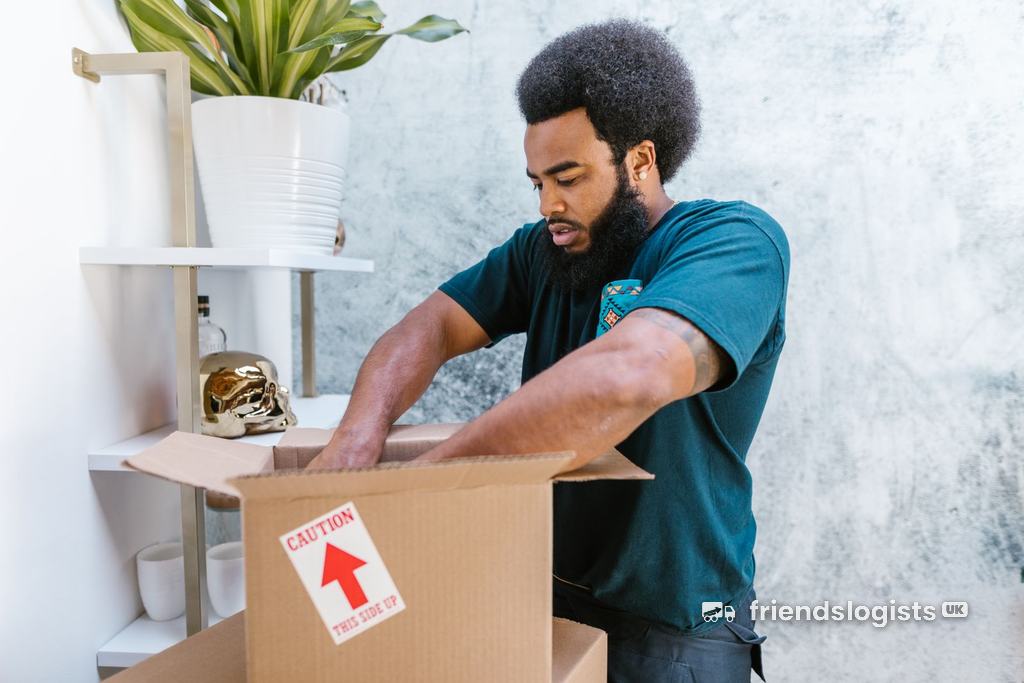
Kitchens hold more fragile items than any other room. We wrap plates individually and stand them on their edges, pack glasses with paper inside and out, and fill every gap so nothing moves. Heavy items such as pans and small appliances go in small boxes at the bottom; light items go on top. Each box is marked with its contents and "this way up" where needed.
Packing tips if you're doing it yourself
- Use small boxes for heavy things (books, tins) and large boxes for light things (bedding, cushions).
- Never leave empty space in a box — fill gaps with paper, towels or clothing.
- Label each box on the side (not the top) with the room and a short list of contents.
- Keep screws and fittings in labelled bags taped to the furniture they belong to.
- Pack a first-night box: kettle, mugs, toiletries, chargers, bedding, medication and snacks.
- Don't pack hazardous items such as paint, fuel, gas bottles or aerosols — we can't transport them.
Want more advice? Our free moving house checklist covers every step from eight weeks out to moving day.
Packing combined with removals and storage
Most customers book packing together with our house removals or office relocation service, usually the day before moving day. If you're storing belongings, professional packing also protects items for longer periods in storage.